
Fast Setup for Parts That Cannot Wait on Programming
Manual machining services in Shreveport for industrial plant repairs and custom one-off components where CNC programming time exceeds the production requirement
Not every part justifies the time required to write, verify, and prove out a CNC program before the machine runs a single cut. When a plant in Shreveport needs one replacement bushing, one modified shaft end, or one custom bracket to get a line running again, manual machining handles the job faster than setting up a CNC program for a single piece. FiberTec Laser Cutting operates manual mills, lathes, and drill presses alongside its CNC equipment, giving industrial clients access to both approaches depending on what the part and the timeline actually require.
Machinists work from raw stock or laser-cut blanks, setting up the workpiece and cutting directly with manual tool control. Turning operations on the lathe handle shafts, sleeves, and rod features; the mill handles flat surfaces, slots, and drilled patterns. Manual setup allows fast changeovers between different part types without reprogramming—a machinist switches from a turned part to a milled part by changing the fixturing, not rewriting software. All machining happens in-house at FiberTec, so finished pieces move into welding, assembly, or coating without leaving the facility.
Bring your worn or damaged part, or your sketch, to start a direct review of what manual machining can accomplish for your specific repair or fabrication need.
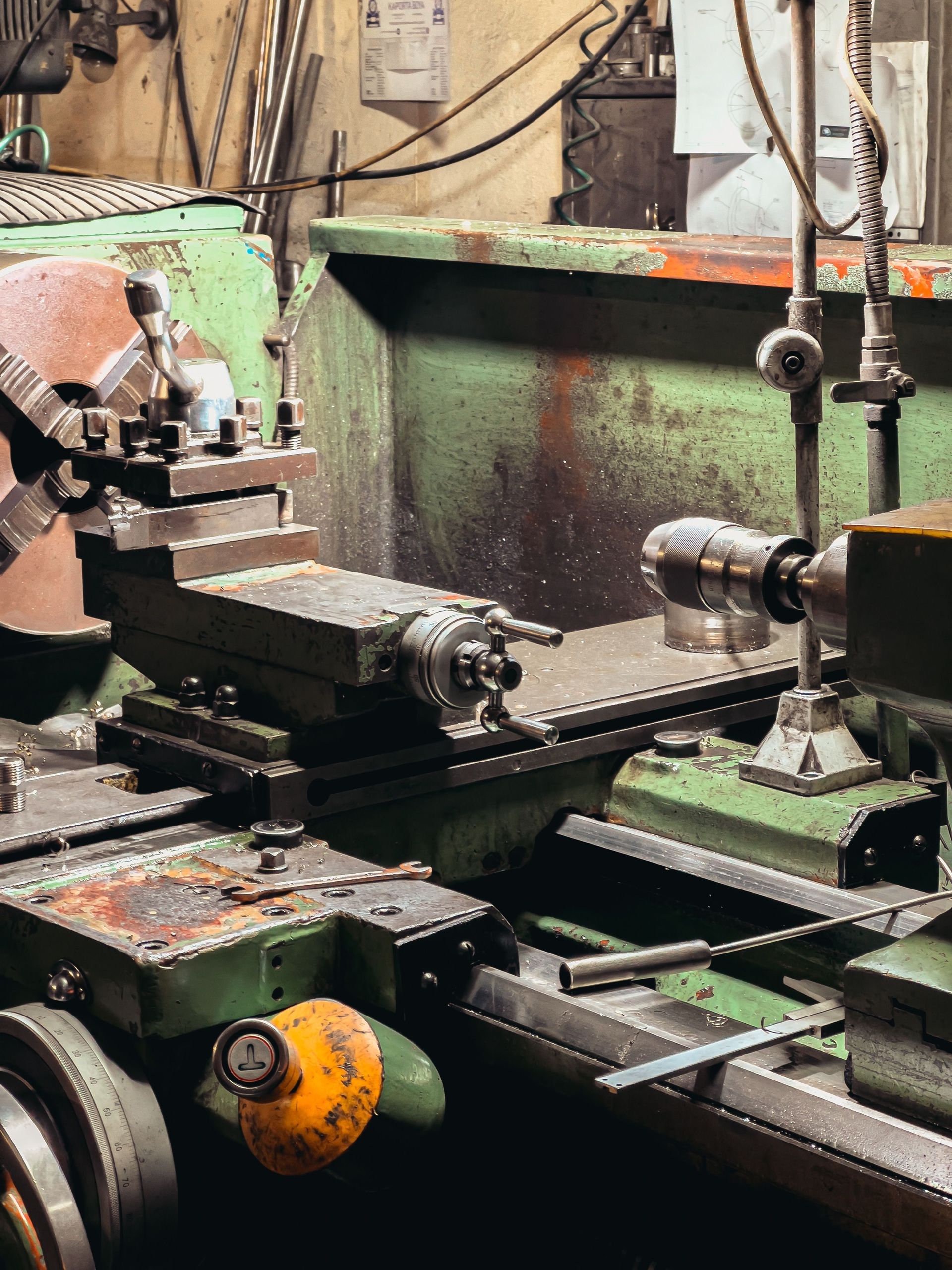
What Manual Machining Handles That CNC Does Not Fit
The practical advantage of manual machining shows up at two points: part complexity and quantity. For a single replacement component where the geometry is straightforward—a turned diameter, a faced surface, a drilled and tapped hole—a skilled machinist at a manual lathe produces that part faster than the programming cycle for a CNC machine. For a custom modification to an existing part—removing material from a specific location, adding a feature to a casting, cleaning up a damaged surface—manual machining allows the machinist to make decisions at the machine rather than specifying every cut in advance through code.
After manual machining, the finished part has the same functional standards as any other machined component: mating surfaces are flat, bores hold their specified diameter, and threaded features engage correctly. What changes for the client is throughput—a single repair part that would take a full day to program and prove out on a CNC machine can be finished manually in a fraction of that time, which matters when a piece of plant equipment is waiting on it.
FiberTec's industrial volume—approximately 90 percent of work flows through manufacturing plants and paper mills—means manual machining is not a fallback capability but a regular part of how repair and small-batch work gets handled. A plant that needs three different repair parts on the same day benefits from the flexibility of manual setup: each part runs as a standalone operation without queuing behind a programmed batch sequence.
What Shops Ask About Manual Machining Work
The questions below address how manual machining is approached at FiberTec, what work it handles best, and how finished parts integrate with other fabrication operations in the same facility.
What types of parts are best suited for manual machining rather than CNC?
Single pieces, simple geometry, and fast-turnaround repair components suit manual machining because the setup time is short—when a part needs one turned diameter and one drilled hole, a manual lathe produces it without the programming overhead that a CNC process requires.
How does a machinist determine dimensions when no drawing is available?
When a worn part arrives without documentation, the machinist measures the original component directly—diameter, thread pitch, length, and feature positions—and machines the replacement to match those measured dimensions.
What is the difference between roughing and finishing on a manual lathe?
A roughing pass removes material quickly to bring the workpiece close to final size; a finishing pass uses a sharper tool at slower feed to achieve the surface finish and dimensional tolerance the part requires—both passes are standard practice, not optional steps.
How does manual machining coordinate with laser cutting at the same facility?
Laser-cut blanks that need a bored hole or a machined edge feature move from the cutting station to the manual machine without leaving the shop, which keeps the part's geometry intact and eliminates re-fixturing problems that occur when parts are transported between vendors.
What does the surface of a correctly finished manual-turned shaft look like?
The surface shows consistent tool marks from a controlled finishing pass—no chatter pattern from tool vibration, no irregular depth variation from interrupted cuts, and a consistent diameter that a micrometer confirms within the specified tolerance band.
FiberTec Laser Cutting matches manual or CNC machining to the part requirements, keeping both capabilities in-house so that industrial clients receive the right process for each job without being routed to a separate shop. FiberTec also provides manual machining services in Bossier City, Texarkana, Marshall, Longview, and Kilgore. Call 318-678-3284 to describe your part or bring it in for a direct review.