Engineering and Fabrication Handled at One Location
CAD engineering services in Shreveport for industrial plants and manufacturers requiring complete design-to-part production
Manufacturing plants built across north Louisiana and East Texas during the mid-to-late twentieth century typically rely on aging equipment whose original engineering drawings no longer exist or were never held in-house—leaving procurement teams to reverse-engineer replacement parts from worn components with no documentation to reference. FiberTec Laser Cutting works directly with those conditions, taking a physical part, a set of specifications, or a rough concept and developing complete CAD engineering before moving into production at the same facility. No drawings are handed off to a separate fabricator; the engineering and the machines that execute it are in the same building in Shreveport.
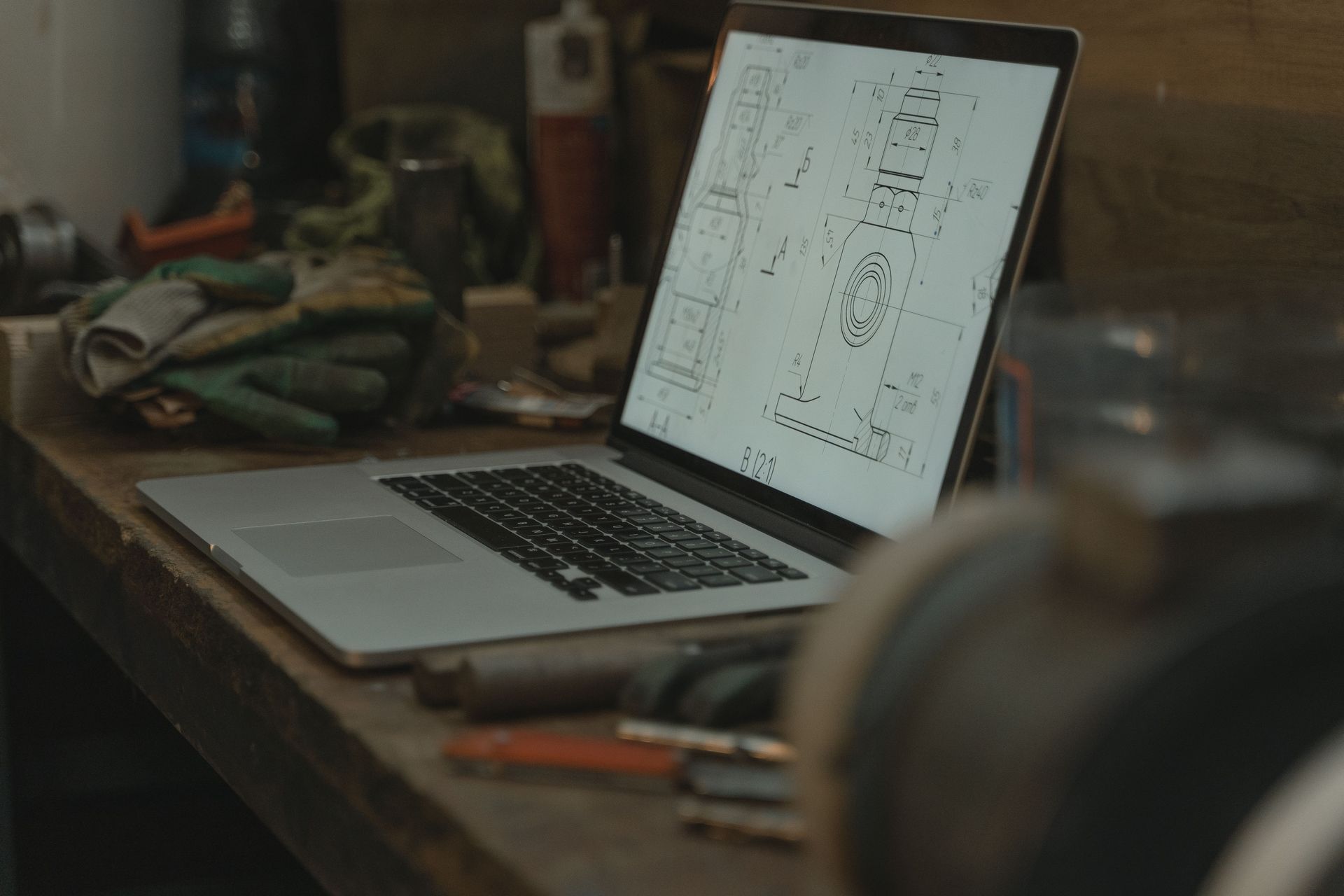
FiberTec's engineering workflow covers the full sequence from concept to finished assembly. Customer specifications enter as sketches, worn parts, or engineering notes; from those inputs the team develops complete CAD drawings that account for material selection, dimensional tolerances, and the specific fabrication methods—laser cutting, CNC machining, brake press bending, welding, or powder coating—that the design will require. Because engineering decisions are made by people who also operate the production equipment, the drawings that come out of the design phase are production-ready rather than ideal-world documents that create problems when they reach a machine operator.
Arrange a project consultation with FiberTec Laser Cutting to review your specifications and establish the scope of engineering and production work involved.
Why Integrated Engineering Reduces Handoff Errors
When engineering and fabrication are separated between two vendors, dimensional drift accumulates at every handoff—a tolerance stated on a drawing is interpreted differently by the fabricator, a material substitution happens without notifying the designer, or a revision request sits in an inbox while production waits. FiberTec eliminates each of those failure points by holding engineering, laser cutting, CNC machining, brake press bending, welding, and powder coating under one roof. A design change decided at two in the afternoon can be in the machine queue before the shift ends, which matters when a plant's production line is waiting on a replacement component.
Customers receive finished parts or assemblies, not drawings to take elsewhere for quotes. That distinction matters for plant engineers managing tight maintenance windows, because the timeline from specification to deliverable part is determined by one schedule, not by the combined calendars of a design firm and a separate fabricator. Approximately ninety percent of FiberTec's work comes from industrial and corporate customers—paper mills and manufacturing plants across Louisiana and East Texas—which means the engineering team is calibrated to industrial tolerances and production-scale requirements rather than one-off custom fabrication.
Pricing at FiberTec covers the engineering and design phase as an integrated service; production costs for cutting, machining, and finishing are quoted separately based on the completed drawings. That structure lets customers understand engineering scope before committing to a full production run, and it gives the engineering team a clear mandate to design for the fabrication methods that will actually be used rather than optimizing on paper for a process that may not be available at the shop doing the cutting.
What Plant Engineers Ask About the Engineering Process
Industrial customers evaluating CAD engineering services want to understand how decisions get made, what the process involves at each stage, and how the engineering connects to the finished part. The questions below address those points directly.
How does FiberTec develop CAD engineering from a worn or undocumented part?
The team measures the physical component, identifies the material and fabrication method it was originally produced with, and builds a CAD model that replicates the geometry while incorporating any dimensional corrections needed for fit or performance.
What fabrication processes does the engineering phase account for?
Drawings are developed with the actual production sequence in mind—laser cutting, CNC machining, brake press bending, welding, and powder coating—so tolerances and geometry are set for the method being used rather than a generic standard.
Why does integrated engineering reduce errors compared to using separate design and fabrication vendors?
Every handoff between vendors introduces an opportunity for a tolerance to be misread, a material to be substituted without designer input, or a revision to be delayed; with engineering and fabrication at one location, those gaps do not exist in the workflow.
What level of documentation is needed to start the engineering process?
FiberTec's engineering team works from physical parts, sketches, written specifications, or partial drawings—formal CAD files are not required as a starting point, and most industrial customers arrive with a mix of those inputs.
How are design revisions managed once production has begun?
Because engineering and production are in the same facility in Shreveport, revisions identified during a test cut or fit check are addressed by the design team immediately, and corrected files re-enter the cutting queue the same day.
FiberTec Laser Cutting also provides CAD engineering services in Bossier City, Texarkana, Marshall, Longview, and Kilgore. To move a project from specification to finished parts, bring your components or drawings to FiberTec and let the engineering team assess the scope before production costs are quoted.