Custom Parts Ready Without Outsourcing Delays
CAD design services in Shreveport for manufacturers needing fast iterations on new or modified parts
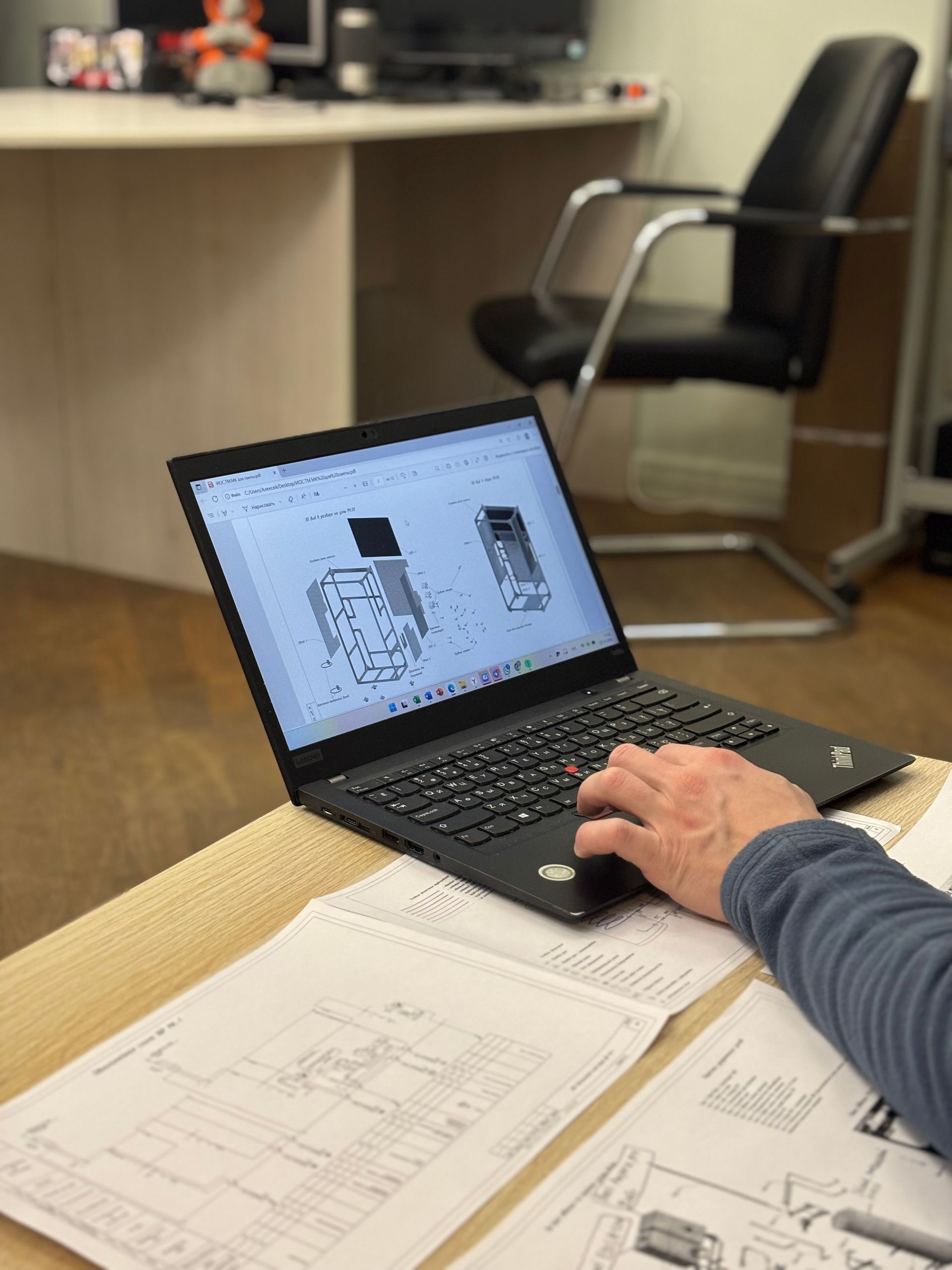
FiberTec Laser Cutting builds custom CAD drawings directly from concept sketches, dimensional notes, photos, or physical parts brought in by the customer. Because the design work and fabrication equipment live under the same roof in Shreveport, files move from the CAD station into laser-cutting nesting software and CNC programs without passing through an outside vendor. Plant engineers and industrial procurement contacts get revision cycles measured in hours, not the days lost to back-and-forth with a separate design firm.
The process starts with whatever the customer can provide—a rough sketch, a broken component, a dimensional drawing from an older machine, or a set of specifications written out by an engineer. From that input, FiberTec designers build 2D or 3D CAD models that incorporate tolerances and material specifications suited to the intended fabrication method, whether that is laser cutting, CNC work, or a combination. Because the designers work alongside the machines and operators daily, they build in the parameters the equipment actually requires rather than drafting to generic standards that create problems at the cutting stage.
Contact FiberTec Laser Cutting directly to walk through your part requirements and arrange an on-site review of your drawings or existing components.
How In-House CAD Connects to Finished Parts
Once a CAD model is complete, it integrates directly with the nesting software that arranges cut paths across sheet material, optimizing material use before a single cut is made. Revisions—whether driven by a tolerance issue found during test cutting or a design change from the customer's engineering team—happen on-site, which means the updated file is back in the machine queue the same shift rather than waiting for a third-party designer to respond. This closed loop between design and production is the operational difference between a shop that outsources CAD and one that does not.
After the design is finalized and parts are cut or machined, customers receive components that match the CAD geometry dimensionally—what was modeled is what was built. Industrial customers running paper mills or manufacturing plants, which make up approximately ninety percent of FiberTec's work volume, can verify fit and function immediately rather than discovering dimensional drift that originated in a file handoff between separate vendors. That direct traceability from drawing to finished part is what makes rapid equipment modifications practical.
FiberTec handles both 2D flat-profile drawings suited to sheet metal and laser-cut work and 3D models used for assemblies with multiple components. The design scope scales to what the job requires, and customers are not required to arrive with a polished drawing—raw sketches and physical reference parts are a legitimate starting point the design team works with routinely.
Common Questions About How the Design Work Gets Done
Industrial customers in Shreveport and the surrounding manufacturing corridor frequently ask how the CAD process works when they do not have formal drawings to start from. The questions below address the most common points about how design work is scoped, revised, and connected to production.
What formats or inputs can FiberTec start from when building a CAD drawing?
Designers work from sketches, photographs, physical parts, written dimensions, or existing drawings in most standard file formats—there is no requirement to arrive with a finished CAD file for the work to begin.
How are tolerances determined during the design phase?
Tolerances are built into the model based on the fabrication method and material specified, because laser-cut sheet metal, CNC-machined plate, and bent components each carry different achievable tolerances that the designer accounts for before the file reaches the machine.
What happens when a design revision is needed after the initial model is complete?
Revisions are handled on-site without involving an outside vendor, so updated files re-enter the production queue the same day rather than waiting on an external design firm to respond.
How does the CAD file move from the design stage to the cutting equipment?
Completed drawings feed directly into the laser-cutting nesting software, which arranges cut paths across the sheet to optimize material use before the equipment begins cutting.
What should a plant engineer in Shreveport bring to an initial design consultation?
Bringing the physical part, a dimensional sketch, or a written specification list gives the design team enough to assess tolerances, material requirements, and whether the geometry is suited to laser cutting, CNC work, or a combination of both.
FiberTec Laser Cutting also provides
CAD design services in Bossier City, Texarkana, Marshall, Longview, and Kilgore. To begin a project, bring your part, sketch, or specifications to FiberTec and let the design team build the model directly from your inputs before quoting the production run.