Clean Cuts Through Metal Without Secondary Finishing
CNC laser cutting services in Shreveport for industrial parts requiring tight tolerances, intricate profiles, and direct integration into downstream fabrication
A laser-cut edge that needs secondary deburring or grinding before it can move to welding adds time and handling to every part in a batch run. FiberTec Laser Cutting eliminates that step—parts come off the laser with edges ready for the next operation, whether that is bending, welding, or assembly. That edge quality is what industrial plants and paper mills along the I-49 corridor depend on when fitting custom components into tight equipment tolerances where a rough edge or inconsistent profile causes assembly problems downstream.
Work begins when your design arrives as a CAD file or sketch. FiberTec converts it into cut programming that runs intricate shapes and fine details through metal stock in a single pass. For batch production—when a plant needs twenty identical bracket blanks, not just one—parts sequence through the laser continuously, each piece cut to the same profile without manual repositioning between runs. Once cut, parts move directly to bending, welding, or powder coating within the same facility, with no transport step between operations.
Send your part file or a dimensioned sketch to start the cutting program review for your current production requirement.
What Laser Cutting Actually Accomplishes at the Industrial Scale
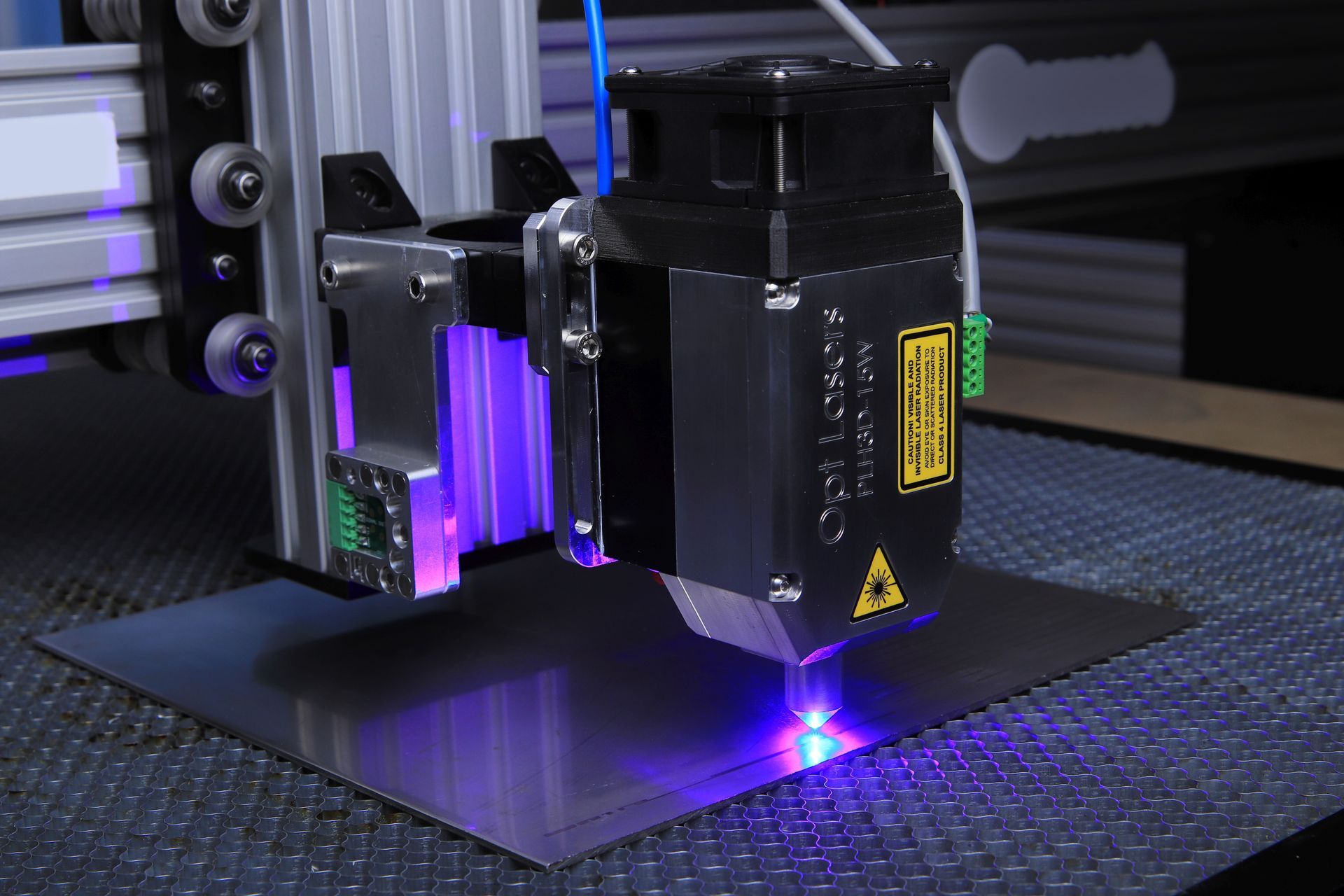
The laser cuts by directing a focused beam through metal stock, vaporizing material along the programmed path. What that means practically is that the kerf—the width of material removed—is narrow and consistent, which matters when a part has a profile with tight internal corners or small-diameter holes that a plasma cutter or waterjet cannot reproduce at the same dimensional accuracy. For the custom pump components and equipment panels that manufacturing plants in the Shreveport area require, that dimensional accuracy is the difference between a part that assembles correctly the first time and one that requires modification on the floor.
After cutting, the visible difference is straightforward: edges are square, profiles match the programmed geometry, and hole positions are where the drawing places them. There is no slag line to grind, no edge taper to compensate for, and no profile deviation that accumulates across a batch run. For plants ordering replacement panels or custom enclosure parts, that consistency means the first piece off the laser can be fitted to confirm geometry before the rest of the batch runs—not after.
FiberTec handles approximately 90 percent of its volume through industrial and corporate accounts, which shapes how cutting programs are built. Batch runs get nested programming to minimize material waste across the sheet, and one-off custom parts get the same CNC precision without a minimum-quantity requirement. Both scenarios flow into the full in-house fabrication cycle at FiberTec Laser Cutting—cutting does not exist as a standalone step that leaves the shop incomplete.
Questions About How the Cutting Work Gets Done
The following questions address the laser cutting process itself—how parts are programmed, what affects cut quality, and what clients receive when parts come off the machine.
What file formats does the laser cutting process accept?
CAD files in standard formats and dimensioned sketches both work as starting points; the programming step converts your geometry into the cut path the machine follows, so the source format does not need to be production-ready to begin the review.
How does material thickness affect what the laser can cut?
Thicker stock requires adjusted power settings and feed rate to maintain edge quality—programming accounts for this so that a part cut from quarter-inch plate holds the same edge standard as one cut from twelve-gauge sheet.
Why does nesting matter for batch production runs?
Nesting arranges multiple part profiles across the sheet to minimize scrap between cuts; for industrial orders where a plant needs twenty or more identical pieces, well-nested programming reduces raw material cost without affecting part geometry.
What makes a laser-cut edge ready for welding without additional preparation?
The focused beam produces a clean shear face without the slag deposits that plasma cutting leaves; a weld joint that starts with a clean laser edge closes more consistently than one that starts with a ground or torched edge that has surface variation.
How does laser cutting integrate with other fabrication steps at the same facility?
Cut blanks move directly to the brake press or welding station within the shop—parts do not leave the building between operations, which prevents the dimensional changes that occur when material is transported, stacked, and rehandled between separate vendors.
FiberTec Laser Cutting serves industrial and manufacturing clients who need cutting integrated with bending, welding, and powder coating in one facility rather than coordinated across multiple shops. FiberTec also provides
CNC laser cutting services in Bossier City, Texarkana, Marshall, Longview, and Kilgore. Contact FiberTec at 318-678-3284 to review your part requirements and start a cutting program.