
Precision Bending Built for Industrial Tolerances
CNC brake press sheet metal bending in Shreveport for fabricated panels, enclosures, and structural components requiring repeatable formed geometry
Industrial plants and paper mills throughout Louisiana and East Texas depend on formed metal components—enclosures, mounting brackets, structural panels—that must hold tight geometry through repeated assembly cycles. FiberTec Laser Cutting operates CNC brake press equipment in Shreveport as part of a fully integrated in-house manufacturing process, meaning bent parts move directly into welding or assembly without leaving the facility between operations. That continuity eliminates the handling delays and tolerance stack-ups that occur when bending is outsourced to a separate shop.
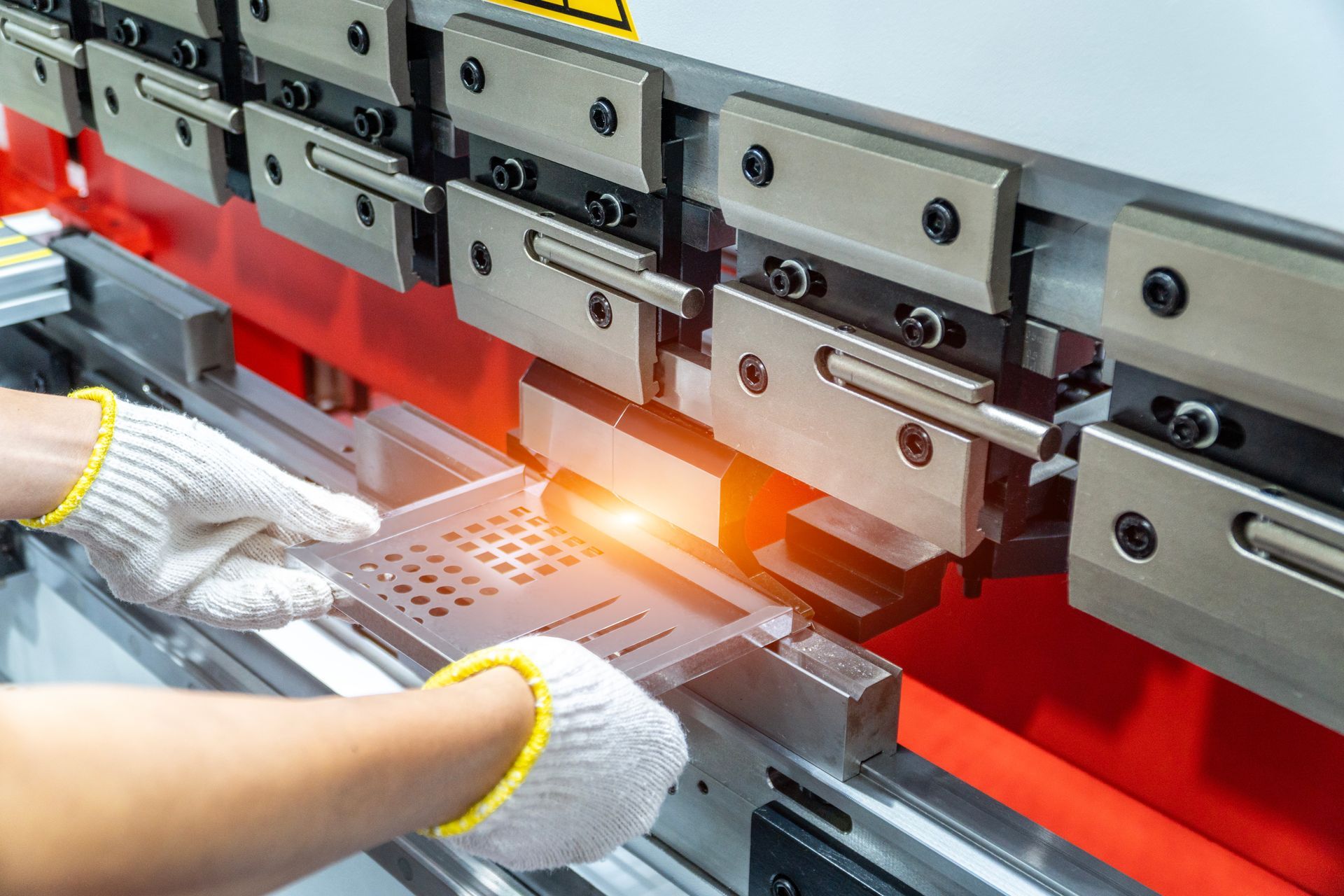
Sheet metal arrives flat or is laser-cut to net shape before loading into the brake press. The CNC system controls tool positioning and clamping force with precision, executing multiple bends in a single setup and sequencing each angle and radius to spec. When a part requires five bends to produce a formed enclosure panel, all five happen in one controlled session rather than across multiple manual setups that accumulate error. Finished pieces feed directly into the next operation—welding, assembly, or powder coating—within the same shop floor.
Arrange a project review to walk through your formed part drawings and establish what the CNC brake press process involves for your specific component geometry.
How Integrated Bending Changes Fabrication Outcomes
The brake press process begins with programming bend sequences based on part geometry—the order of bends matters because a flange formed too early can block tool access for subsequent bends on the same piece. FiberTec's CNC equipment executes each step with consistent clamping force, which is particularly relevant for the formed enclosures and structural brackets that manufacturing plants in North Shreveport require for plant equipment installation.
Once bending is complete, parts arrive at the next operation dimensionally consistent—flanges are square, angles match spec, and mating surfaces align without secondary correction. That consistency is what allows welded assemblies to close correctly without shimming or grinding to compensate for a formed panel that came in off-angle. The visible result is a fabricated assembly where joints close cleanly and hardware mounts without modification.
Approximately 90 percent of FiberTec's work flows through industrial and corporate accounts, including paper mills and manufacturing plants across Louisiana and East Texas. That volume means brake press programs are built for repeatable production runs, not one-off adjustments—which matters when a facility needs ten identical enclosure panels, not just one.
What Plant Fabricators Ask About Brake Press Work
The questions below address the brake press bending process specifically—what happens during the work, how part geometry affects sequencing, and what finished pieces look like when they come off the press.
What metal types does the CNC brake press handle?
The press works with mild steel, stainless, and aluminum sheet in gauges commonly used for industrial enclosures and structural components; material thickness affects tool selection and bend radius, which the CNC program accounts for before the first bend runs.
How does bend sequence affect the finished part?
When a part has multiple flanges, the order of bends determines whether the tooling can physically access each bend line—programming sequences bends from the inside geometry outward so earlier folds do not block tool clearance on subsequent passes.
Why does CNC positioning matter more than a manual press for industrial parts?
CNC back-gauge positioning controls where the sheet stops before each bend, holding repeatability across a production run so that the tenth part matches the first without manual measurement between pieces.
How do brake press parts integrate with laser-cut blanks from the same facility?
Laser-cut blanks arrive at the brake press with edges already at net shape, so the press operates on material that is correctly sized—no trimming or re-cutting step between operations, which keeps parts moving without delay.
What does a correctly formed enclosure panel look like when it comes off the press?
Flanges meet at specified angles, corner radii are consistent across all bends, and mating edges align flat so that welded joints close without gaps that would require filler to correct.
FiberTec Laser Cutting handles brake press bending alongside laser cutting, welding, and powder coating for industrial clients who need complete fabricated assemblies from a single location. FiberTec also performs CNC brake press work in Bossier City, Texarkana, Marshall, Longview, and Kilgore. Submit your part drawings or specifications to start the review process at 318-678-3284.