Machined Parts That Move Directly Into Assembly
CNC machining for custom parts in Shreveport when plant equipment requires precise bored, threaded, or faced components that fit without secondary correction
Manufacturing plants and paper mills that operate precision pump assemblies, motor mounts, and processing equipment depend on machined components that arrive at spec—not close to spec. FiberTec Laser Cutting provides CNC machining in Shreveport for both custom one-off parts and batch production runs, with machining integrated into the same facility that handles laser cutting, bending, welding, and powder coating. When a part needs to be cut, machined, and then welded into a larger assembly, that sequence runs entirely in-house without the delays and handling risks of coordinating multiple vendors.
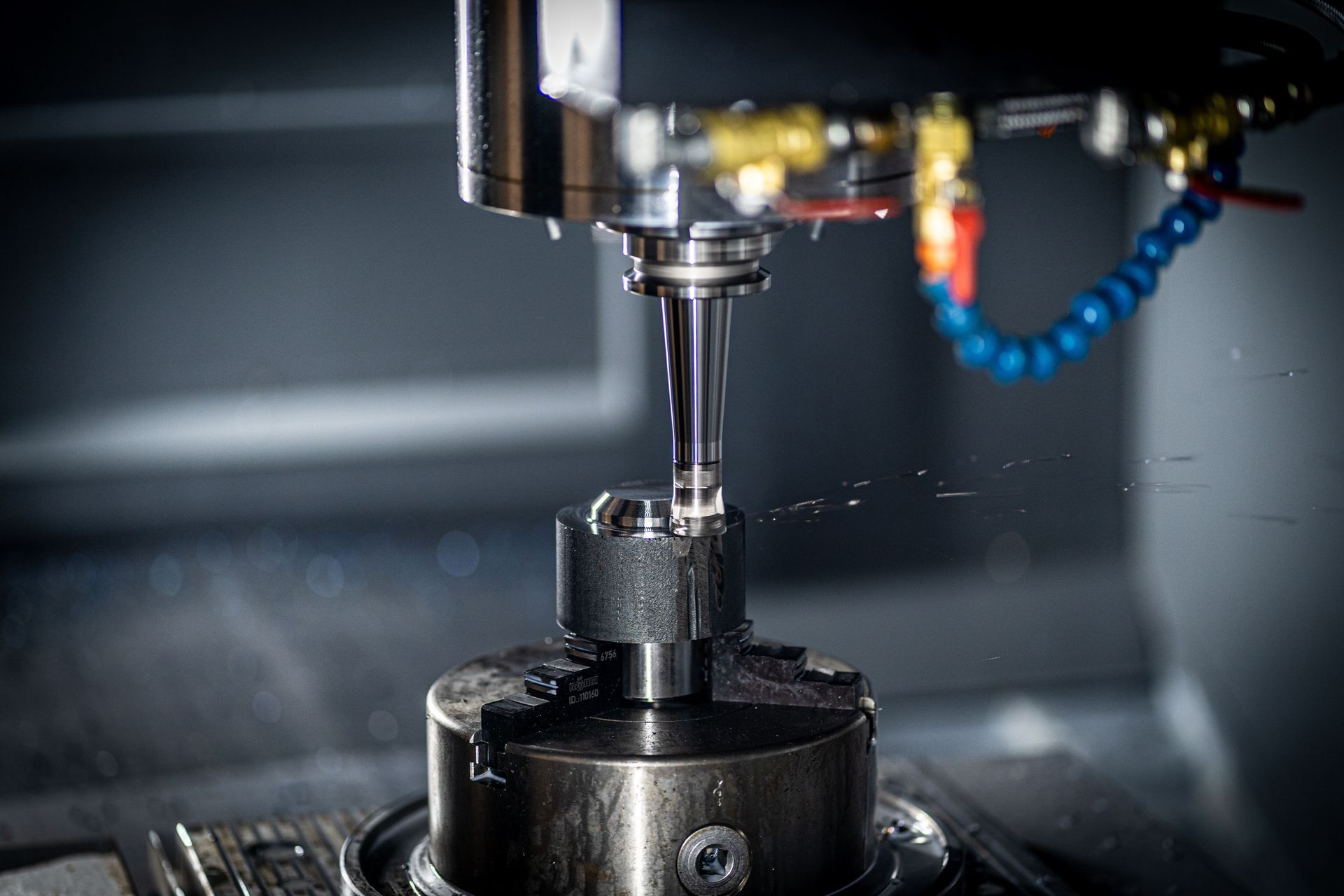
Parts load into CNC mills and lathes for boring, threading, facing, and other subtractive operations. Custom programs execute tool changes between operations within a single setup, which means a part that requires both a turned diameter and a threaded end does not require two separate setups or two separate machines scheduled back to back. For batch work, the same program runs each piece consistently—what matters for plant maintenance orders is that replacement components are dimensionally identical to each other and to the original, not just approximately matched.
Request a part drawing review to confirm which machining operations apply to your component and how that work fits into the broader fabrication sequence.
Why Process Integration Defines Machining Quality
CNC machining at FiberTec operates on two types of input stock: raw material that enters the shop as bar stock or plate, and laser-cut blanks that have already been profiled before they reach the machine. When a part starts as a laser-cut blank, the CNC program references the existing geometry—the holes and profiles are already positioned, so machining operations like boring or counterboring run against a known reference rather than a raw, unlocated workpiece. That sequencing reduces setup time and keeps dimensional relationships between features accurate.
When machined parts come off the mill or lathe, the visible indicators of correct work are specific: bores are round and to tolerance, threaded features engage without galling, and faced surfaces are flat enough to seat against gaskets or mating components without leakage paths. For the industrial clients FiberTec serves—including paper mills and manufacturing plants across Louisiana and East Texas—those outcomes matter at the assembly stage, where a component that is slightly off-tolerance causes a fitting problem that stops production until it is corrected.
Approximately 90 percent of FiberTec's volume flows through industrial and corporate accounts, which means CNC programs are structured for both repeatability and flexibility—small batches run without minimum-quantity constraints, and custom one-off parts receive the same program precision as a production order. Machined components also coordinate with other fabrication steps: a machined bracket that then receives a weld or a powder coat finish moves through those steps within the same facility.
Answers About the CNC Machining Process
These questions address what happens during CNC machining, how programs are built for custom and batch work, and what finished machined parts look like when they are ready for assembly.
What operations does CNC machining cover at this facility?
Mills and lathes handle boring, threading, facing, turning, and counterboring; the combination of both machine types means a part that needs both rotational and prismatic features can be completed without moving to a second facility.
How does machining from a laser-cut blank differ from machining raw stock?
A laser-cut blank arrives with its outer profile already established, so the CNC program locates off existing geometry rather than establishing a reference from scratch—this reduces setup steps and keeps hole positions accurate relative to the part's outer shape.
When does a machined part require multiple tool changes within one setup?
When a feature sequence includes drilling, then boring to final diameter, then threading, the program queues those tools in order within the same fixture so the part does not move between operations, preserving the positional relationship between features.
What does a correctly machined bore look like before a cylinder or bushing is pressed in?
The bore is round within the specified tolerance, the surface finish is consistent without chatter marks from a vibrating tool, and the entry chamfer is clean so that the pressed component seats without galling the bore wall on the way in.
How does CNC machining support replacement part production for plant equipment in the Shreveport area?
When a plant needs a replacement component for older equipment—pumps, presses, or assembly line machinery—the CNC program can be built from the original part's dimensions, allowing production of a correctly dimensioned replacement without an original drawing on file.
FiberTec Laser Cutting machines custom and batch industrial parts for clients who need
CNC work integrated with cutting, forming, and finishing under one roof. FiberTec also performs CNC machining for custom parts in Bossier City, Texarkana, Marshall, Longview, and Kilgore. Call 318-678-3284 to discuss your part specifications and confirm what the machining sequence involves for your component.